On any given weekday morning in London, you will see them everywhere. Gliding past traffic jams, weaving through side streets, parked outside cafes and offices alike. E bikes have quietly become part of the city is daily rhythm. They promise speed without sweat, longer commutes without exhaustion, and an alternative to crowded trains. Yet alongside their popularity, something else has grown just as fast confusion. Ask five Londoners whether e bikes are legal and you will likely get five different answers. Some think all e bikes are basically electric motorbikes in disguise. Others assume anything sold in a bike shop must be legal by default. The truth sits somewhere in between, wrapped in technical definitions, outdated assumptions, and inconsistent enforcement. In a city already juggling complex transport rules, e bikes have added a new layer of uncertainty.
Why E Bikes Took Off So Quickly
London was primed for e bikes long before most people noticed them. Commutes grew longer as housing pushed further out, traffic congestion became a daily certainty, and public transport costs continued to rise. Cycling offered freedom, but not everyone could manage long distances, hills, or arriving at work drenched in sweat. E bikes stepped neatly into that gap. They appealed to older riders who wanted to keep cycling without physical strain, parents carrying children or groceries, and commuters who needed a reliable alternative to delayed trains. Delivery riders adopted them en masse, turning e bikes into a visible and sometimes controversial presence on the roads. As sales climbed, legislation struggled to keep pace with how people actually used these machines.
What the Law Actually Says
Legally speaking, e bikes in the UK are split by a definition most riders never read. A standard, road legal e bike is known as an Electrically Assisted Pedal Cycle, or EAPC. It must have pedals that are used to propel the bike, a motor limited to 250 watts, and electric assistance that cuts off at 15.5 mph. As long as those conditions are met, the bike is treated just like a regular bicycle. No licence, no tax, no insurance, no registration. The confusion begins when bikes stretch beyond those limits. Throttle controlled bikes that can move without pedalling, motors that exceed power limits, or assistance that continues past the speed cap push the vehicle into a different legal category. At that point, it is no longer considered a bicycle at all. It becomes a motor vehicle, with all the paperwork and restrictions that come with that status.
Why So Many Riders Do not Realise They are Breaking the Law
The problem is not that London cyclists are eager to bend the rules. It is that the rules are rarely explained clearly where it matters most at the point of sale. Online marketplaces are full of e bikes advertised as UK legal without meeting the legal criteria. Speed figures are blurred, power ratings are glossed over, and the difference between pedal assist and throttle control is often poorly explained. For many buyers, the assumption is simple. If it looks like a bike and is sold as a bike, it must be allowed on the road. That assumption has caught out countless riders, particularly delivery workers and commuters trying to save money. Only after being stopped by police, or worse, involved in an accident, do they discover that their bike technically requires insurance, a licence, and registration they never knew they needed.
Enforcement That Feels Random
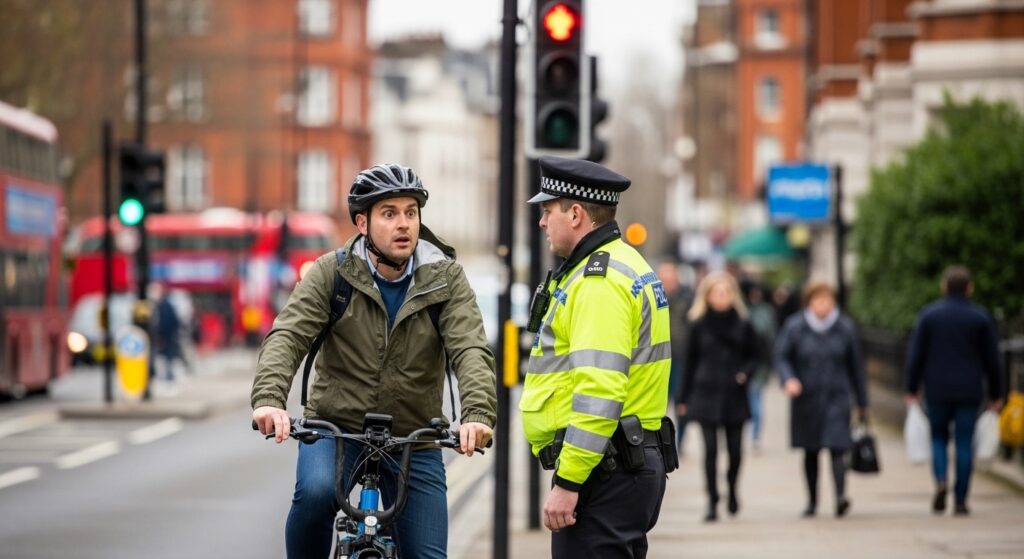
Part of the confusion comes from inconsistent enforcement. On some streets, illegal e bikes pass police cars daily without comment. On others, officers conduct targeted crackdowns, seizing bikes and issuing fines. From a rider is perspective, the rules can feel arbitrary, enforced only when convenient or politically visible. This inconsistency undermines trust. Cyclists hear stories from friends who have ridden powerful throttle e bikes for years without issue, while others lose their bikes within weeks. The lack of visible, city wide guidance makes it hard for riders to know whether they are safe or simply lucky.
Delivery Riders at the Centre of the Debate
No group sits more squarely in the spotlight than delivery riders. Their reliance on e bikes is practical rather than recreational, and time often matters more than legal nuance. Faster bikes mean more orders and better pay. Yet they are also the most likely to face enforcement, public criticism, and blame for dangerous riding. This has created a tense dynamic. Some argue that delivery companies should take responsibility for ensuring their riders use legal bikes. Others believe the law itself is outdated, failing to account for modern urban work realities. What is missing is a serious conversation about how regulation can protect safety without pushing vulnerable workers into impossible positions.
The Safety Question That Lingers
Legality and safety are often blurred together in public debate, but they are not the same thing. A powerful e bike ridden responsibly can be safer than a legal one ridden recklessly. Still, higher speeds and heavier frames do increase risk, particularly on shared paths and crowded streets. Pedestrians often can not tell whether an approaching e bike is legal or not. What they notice is speed, silence, and unpredictability. This fuels resentment and fear, which then feeds into calls for stricter enforcement or outright bans. Without clearer rules and better education, that tension will only grow.
How Other Cities Have Handled It Better
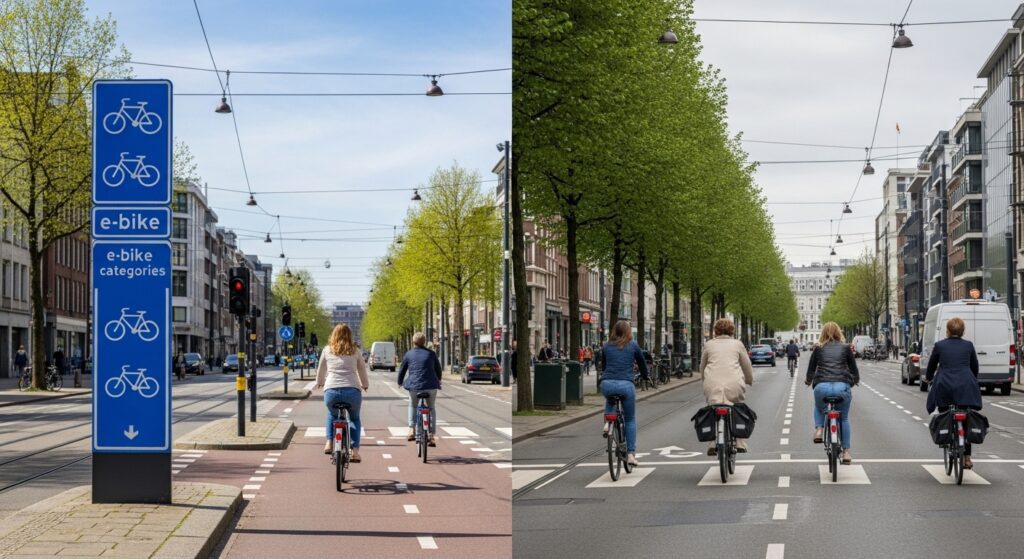
Looking beyond London, some European cities have been more proactive. They have introduced clearer categories, better signage, and widespread public information campaigns explaining what different e bikes are and where they belong. In those places, riders are less likely to accidentally break the law, and enforcement feels more consistent. London, by contrast, often relies on riders to educate themselves through government websites few people read. In a city that prides itself on progressive transport policy, this hands off approach feels increasingly out of step with reality.
Where the Law Needs to Catch Up
E bikes are no longer a niche technology. They are part of the transport ecosystem, and the law needs to reflect how people actually use them. That could mean clearer labelling requirements, better regulation of online sellers, or even new legal categories that sit between bicycles and motor vehicles. Education is just as important as enforcement. Riders need straightforward guidance that does not require legal training to understand. Without it, confusion will continue, resentment will grow, and the promise of e bikes as a clean, accessible transport option will be undermined.
The Road Ahead for London’s Bike Scene
London stands at a crossroads. E bikes could play a major role in reducing congestion, cutting emissions, and making cycling accessible to more people. But that potential depends on trust, clarity, and fairness. Riders need to know where they stand, pedestrians need to feel safe, and enforcement needs to be predictable rather than reactive. As awareness grows, bike shops, campaigners, and local businesses have a role to play in bridging the knowledge gap. Conversations around legality should not feel intimidating or technical. They should feel practical, human, and grounded in everyday experience. If London can get that balance right, the city is relationship with e bikes could become far less confusing and far more productive something places like Chelsea Bikes are already helping riders navigate one conversation at a time.