Autumn is a beautiful time to explore London by bicycle. The parks turn golden, the mornings feel cooler, and quieter streets can make weekend rides particularly enjoyable. From cycling along the Thames to travelling through Chelsea’s tree-lined streets, there are plenty of reasons to keep riding as the seasons change.
However, autumn also brings challenges for cyclists. Wet roads, fallen leaves, muddy paths and shorter daylight hours can make every day journeys more difficult. A familiar route may feel very different after heavy rain, especially when leaves cover the road surface or visibility is reduced.
The good news is that a few simple precautions can help you stay safe and comfortable throughout the season. Here is how to prepare your bicycle, adjust your riding style and make the most of autumn cycling in London.
1. Understand the Risks of Wet and Leaf-Covered Roads
One of the biggest autumn hazards is the combination of rain and fallen leaves. When leaves become wet, they can form a slippery layer on the road, reducing the grip between your tyres and the surface beneath them.
This can be particularly dangerous when turning, braking or riding downhill. A patch of leaves may hide potholes, broken glass or other obstacles, leaving little time to react.
Road markings, metal drain covers and smooth paving can also become slippery in wet conditions. These surfaces are common around London, particularly near junctions and pedestrian crossings.
To reduce the risk, look ahead and choose a clear line whenever possible. Avoid riding over thick piles of wet leaves, especially when turning. If you cannot avoid them, slow down before reaching the slippery section and keep your steering movements gentle.
Remember that a road that looks safe may still have reduced grip after rain. Give yourself extra time to assess the surface and react to changing conditions.
2. Reduce Your Speed and Brake Earlier
Riding at your usual speed may not be appropriate when autumn weather changes the road surface. Wet roads can increase stopping distances, while slippery leaves can make sudden braking more difficult.
The safest approach is to reduce your speed before reaching junctions, bends and pedestrian crossings. Leave more space between yourself and vehicles ahead so that you have enough time to slow down gradually.
Use both brakes smoothly, where appropriate for your bicycle, rather than squeezing one brake sharply. Sudden braking can cause a wheel to lose grip, particularly on slippery surfaces.
Try to complete most of your braking before entering a turn. Once you are turning, keep the bicycle as steady as possible and avoid abrupt changes in direction.
In busy areas of Chelsea, where parked vehicles, pedestrians and traffic can appear unexpectedly, a cautious riding speed gives you more time to respond.
3. Check Your Tyres before Every Ride
Your tyres are the only parts of your bicycle that make direct contact with the road, so their condition matters throughout autumn.
Start by checking the tread and looking for cuts, cracks, embedded glass or other signs of damage. Worn or damaged tyres may be more vulnerable to punctures and can compromise handling.
Tyre pressure is equally important. Follow the pressure range printed on the tyre sidewall or recommended by the manufacturer, taking into account your bicycle, tyre type and riding conditions. Avoid assuming that lower pressure is always better in wet weather, as excessive pressure changes can affect handling and increase the risk of damage.
If you regularly ride on rough roads or paths covered in debris, consider whether tyres with suitable puncture protection would be helpful.
It is also worth checking your wheels for anything unusual, such as a wobble or loose components. If you notice damage or are unsure whether your tyres are safe, have the bicycle inspected before continuing to ride.
4. Keep Your Brakes in Good Condition
Reliable brakes are essential when cycling in unpredictable autumn weather. Rain and road grime can affect braking performance, while worn brake pads may reduce your ability to stop when needed.
Before setting off, test both brakes while stationary. Check that the levers feel firm and that the brakes engage properly. If your bicycle has rim brakes, inspect the pads for wear and remove any visible debris from the braking surfaces. If it has disc brakes, look for signs of excessive pad wear or rotor damage.
During wet rides, braking may feel different from what you are used to. Allow additional time to slow down and avoid waiting until the last moment to brake.
Listen for unusual noises and pay attention to changes in braking performance. Persistent grinding, weak braking or a lever that pulls unusually close to the handlebar may indicate a problem that needs attention.
Never ignore faulty brakes because the weather is inconvenient. A quick inspection or timely repair can make a significant difference to your safety.
5. Make Yourself Visible in Shorter Daylight Hours
Autumn days become shorter, and many London cyclists travel during the morning or evening when visibility is limited. Overcast skies, rain and spray from vehicles can make cyclists harder to see.
Fit a working white front light and red rear light, and use them whenever conditions require them. In the UK, lights are legally required after dark, while additional visibility measures are sensible when visibility is poor. Check current lighting requirements and ensure your equipment meets them.
Reflective clothing, reflective accessories and bright outer layers can also help other road users notice you. Keep lights clean and check their battery levels before leaving home.
Position your lights securely so that they remain visible and do not point directly into other road users’ eyes. If you use rechargeable lights, make charging part of your regular routine.
When riding through Chelsea or other busy London neighbourhoods, remember that being able to see the road does not necessarily mean drivers can see you. Make visibility a priority, particularly near junctions and parked vehicles.
6. Plan Your Route around Autumn Conditions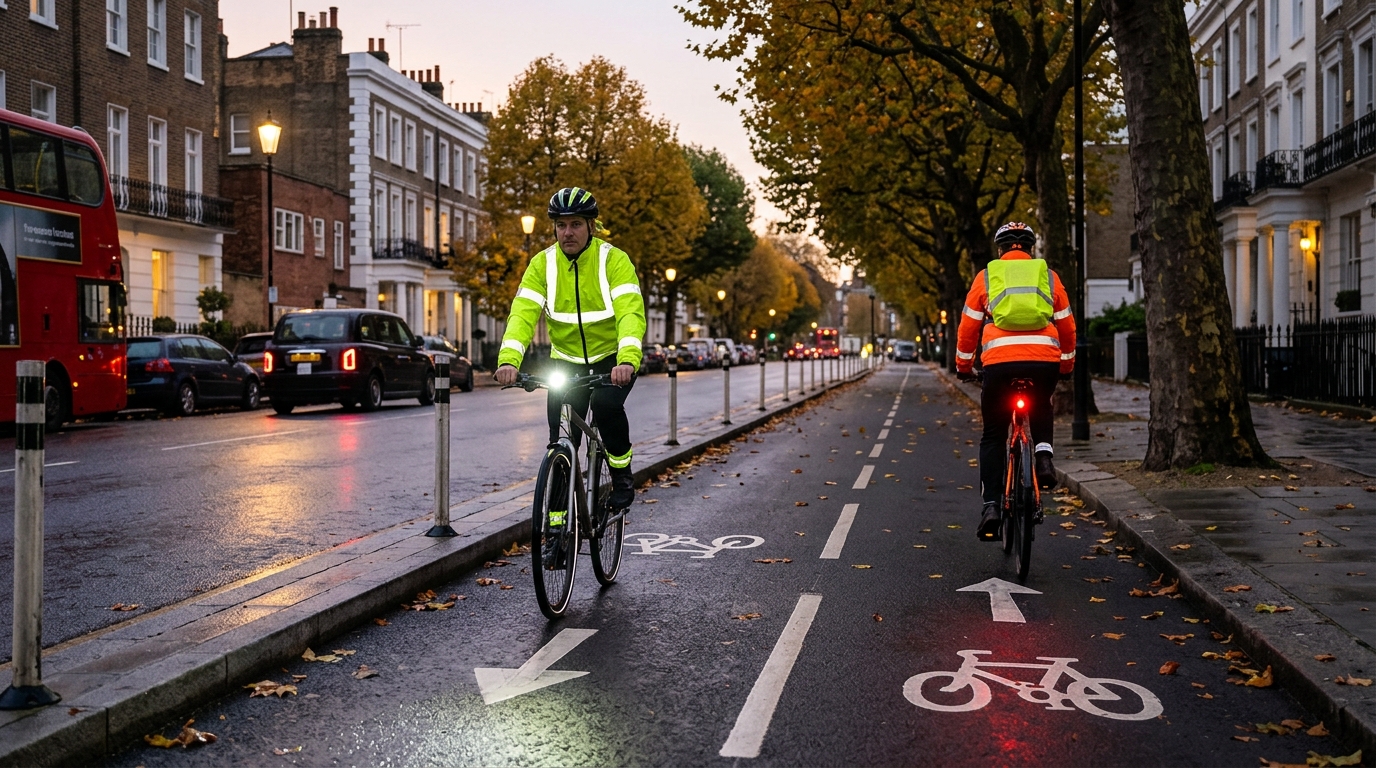
A route that works well in summer may be less suitable during autumn. Heavy rain can leave puddles on roads, while fallen leaves and mud may cover sections of shared paths.
Before leaving, check the weather forecast and consider whether your planned journey is appropriate for the conditions. If possible, choose familiar roads with good visibility and avoid sections known for poor drainage or slippery surfaces.
Be careful around large puddles. They may conceal potholes, broken surfaces or other hazards. If you cannot see what lies beneath the water, avoid riding through it where possible.
Quieter streets can be useful alternatives to busy roads, but do not assume that every quieter route is safer. Consider junctions, road surfaces, lighting and the presence of pedestrians before choosing a diversion.
For leisure rides, parks and riverside paths can be enjoyable options when conditions are suitable. However, check local signs and restrictions, and remember that park paths may become muddy or slippery after rain.
If the weather deteriorates significantly, shortening your journey or postponing the ride is a sensible decision.
7. Be Careful Around Junctions, Buses and Parked Cars
Autumn conditions can make busy London roads more challenging, particularly when rain reduces visibility and leaves cover parts of the road surface.
Approach junctions carefully and look for turning vehicles, pedestrians and other cyclists. Signal clearly when turning, but only when you can maintain control of your bicycle.
Keep a safe distance from parked cars to reduce the risk of being struck by an opening door. Avoid weaving between parked vehicles and moving traffic, as sudden movements can make your intentions difficult for drivers to predict.
Take particular care around buses and lorries. Large vehicles have blind spots, and their drivers may not see cyclists travelling close beside them. Never pass a stationary bus on the left between the vehicle and the kerb, especially when it may pull away or turn.
Wet roads can also affect how quickly vehicles stop. Stay alert, avoid rushing through changing traffic signals and give yourself enough space to react safely.
8. Wear Suitable Clothing for Changing Weather
London’s autumn weather can change quickly. A dry morning may turn into a cold, rainy afternoon, so dressing appropriately helps make cycling more comfortable.
A lightweight waterproof jacket is useful for showers, while breathable layers help prevent you from becoming too hot during longer rides. Water-resistant gloves can keep your hands warmer and make it easier to maintain a secure grip on the handlebars.
Choose trousers or other clothing that will not become caught in the chain or moving parts. If you wear loose-fitting garments, secure them before setting off.
Consider carrying a spare layer if your journey is long or the temperature is expected to fall. Wet clothing can become uncomfortable once you stop moving, especially on windy days.
Comfort matters because cold hands, poor visibility and uncomfortable clothing can distract you from the road. The right equipment helps you focus on riding safely.
9. Clean and Maintain Your Bicycle after Wet Rides
Rainwater and road grime can leave dirt on your bicycle’s chain, gears, brakes and frame. If this dirt builds up, it can contribute to wear and affect the performance of moving parts.
After a particularly wet ride, wipe down the frame and inspect the drivetrain. Clean the chain when necessary and apply a suitable bicycle chain lubricant according to the product instructions. Remove excess lubricant to help prevent dirt from sticking.
Avoid directing high-pressure water at bearings, hubs or other sensitive components. Once the bicycle is clean, dry it with a cloth and store it somewhere sheltered where possible.
Check the brakes and tyres again if you have ridden through heavy rain, mud or areas with substantial debris. If you notice unusual noises, loose components or changes in performance, arrange a professional inspection.
Regular maintenance helps keep your bicycle running smoothly and may prevent small problems from becoming expensive repairs.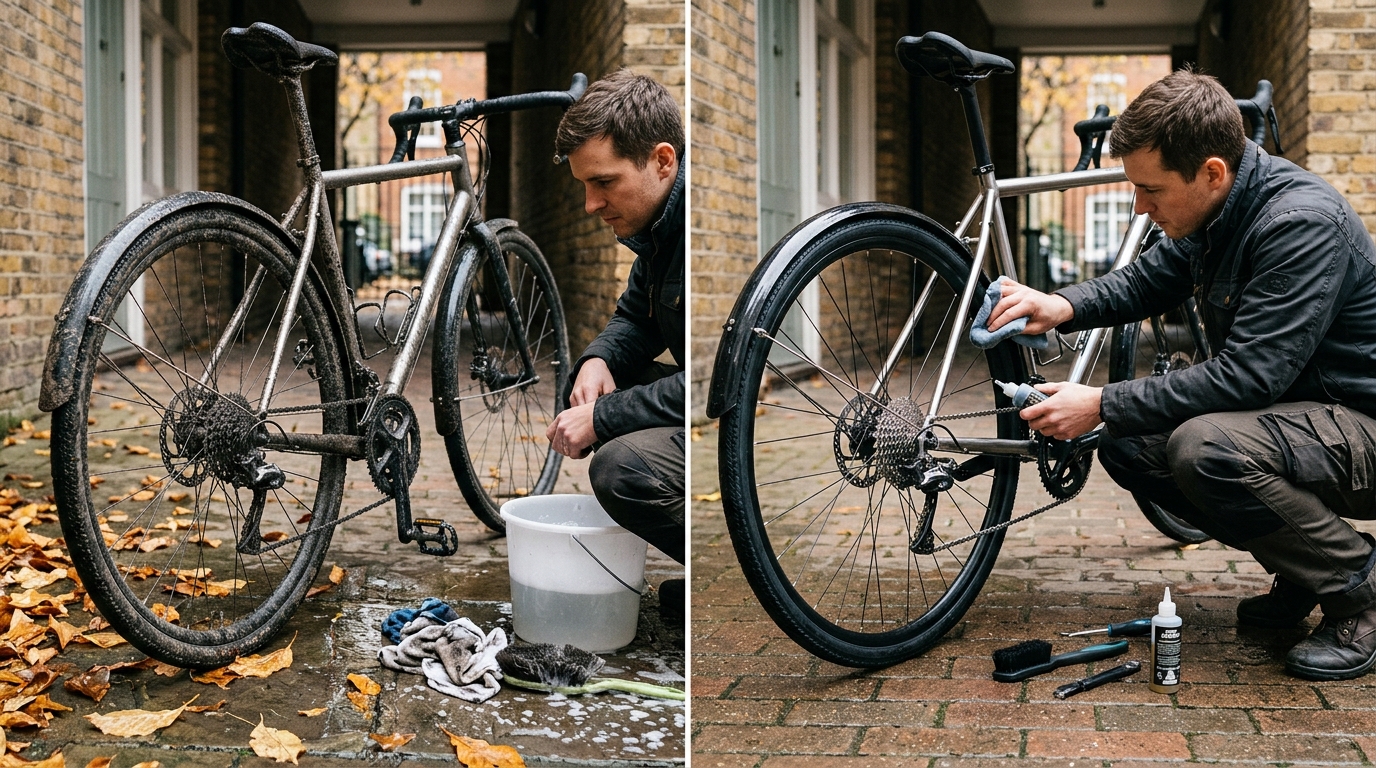
10. Carry a Small Autumn Cycling Kit
A few useful items can make an unexpected problem easier to manage. Consider carrying a compact repair kit that suits your bicycle and the length of your journey.
Useful items include:
- A spare inner tube or suitable puncture repair kit.
- Tyre levers and a portable pump.
- A basic multi-tool.
- A charged front and rear light, with spare batteries or charging equipment where appropriate.
- A waterproof layer and a small cloth.
- A fully charged mobile phone.
You do not need to carry a large collection of tools for every short ride. Choose essentials that you know how to use and check your equipment regularly.
For longer journeys, tell someone your planned route if appropriate and keep an eye on the forecast. If conditions become unsafe, find a suitable place to stop and reconsider your plans rather than continuing simply to reach your destination.
Final Thoughts
Autumn can be one of the most enjoyable seasons for cycling in London, offering colourful scenery, cooler temperatures and opportunities to explore familiar streets in a different way. By slowing down on wet roads, avoiding slippery leaves, checking your tyres and brakes, using appropriate lights and maintaining your bicycle, you can make your rides safer and more comfortable. Always adapt your route to the conditions and remember that it is better to postpone a journey than take unnecessary risks. Whether you need advice on choosing suitable cycling accessories, checking your bicycle or preparing for the colder months, Chelsea Bikes can help you get ready for the autumn cycling season and enjoy your rides with greater confidence.