Cycling is a convenient and enjoyable way to travel around London. Whether you ride to work, visit friends or run daily errands, using a bicycle can save time, reduce travel costs and help you stay active. However, sharing busy roads with cars, buses, taxis and other vehicles means that safety should always be a priority.
Having the right safety equipment can make a significant difference to your daily journey. Some accessories improve your visibility, while others protect you in the event of an accident or help you deal with unexpected problems along the way. You do not need to carry a large collection of equipment, but a few essential items can make your commute safer and more comfortable.
Here are some important pieces of cycling safety equipment every everyday commuter should consider.
1. A Properly Fitted Cycling Helmet
A cycling helmet is one of the most important pieces of protective equipment. Although wearing a helmet is not a legal requirement for adult cyclists in the UK, it is worth considering, particularly if you regularly ride in busy traffic.
A suitable helmet is designed to help protect your head during certain impacts. However, it must fit correctly to provide the intended protection.
When choosing a helmet, make sure it sits level on your head and covers the upper forehead. The side straps should form a comfortable V shape around your ears, and the chin strap should be secure without feeling too tight.
Check the helmet regularly for cracks, damage or signs of wear. If it has been involved in a significant impact, replace it even if there is no obvious external damage.
2. Front and Rear Bike Lights
Good lighting is essential when cycling in the early morning, evening or during poor weather. London roads can become difficult to navigate when visibility is reduced, making it harder for drivers and pedestrians to notice approaching cyclists.
A white front light helps you see the road ahead and makes your bicycle more visible to oncoming traffic. A red rear light allows drivers and other road users to recognise your position from behind.
Choose lights that are suitable for your regular routes and provide enough brightness for the conditions. Rechargeable lights are a practical option for daily commuters because they can be charged at home or work.
UK road regulations also require cyclists to use approved front and rear lights between sunset and sunrise, along with a red rear reflector. Make sure your lights are working before setting off.
- Reflective Clothing and High-Visibility Accessories
Being visible is particularly important when cycling in heavy traffic. Dark clothing can make it difficult for drivers to spot you, especially on poorly lit roads.
A reflective jacket, vest or cycling trousers can help make you more noticeable. Reflective ankle bands are another useful option because the movement of your legs can attract attention from drivers.
You can also choose cycling accessories with reflective details, such as gloves, backpacks, helmet covers and shoe covers.
You do not necessarily need to wear bright clothing throughout the day. However, adding reflective elements to your outfit can improve your visibility when travelling in low-light conditions.
- A Reliable Bike Lock
A secure bike lock is essential for anyone who regularly leaves their bicycle outside an office, shop, station or other public place.
Bike theft is a concern for cyclists in London, so choosing a suitable lock is an important part of protecting your bicycle.
A strong D-lock or U-lock is a popular choice because it can provide good resistance against common theft attempts. Some cyclists also use a secondary cable or chain to secure removable components such as wheels.
When locking your bicycle, choose a fixed and secure cycle stand. Pass the lock through the frame and, where possible, a wheel. Avoid leaving your bike in isolated locations for long periods.
It is also sensible to record your bicycle’s frame number and keep photographs of it. These details may help if your bike is stolen.
- A Loud and Easy-to-Use Bike Bell
A bicycle bell is a small accessory that can be extremely useful during every day journeys.
London cycle routes are often shared with pedestrians, runners and other cyclists. A clear bell helps you alert people to your presence, particularly when approaching from behind or passing through shared spaces.
Choose a bell that produces a sound loud enough to be heard in busy surroundings. It should also be easy to reach without removing your hand from the handlebar.
Use your bell politely and give other road users enough time and space to respond. Remember that a bell is a warning device, not a replacement for slowing down or being prepared to stop.
- A Comfortable Pair of Cycling Gloves
Cycling gloves are useful for both comfort and protection. During longer journeys, regular pressure on the handlebars can make your hands uncomfortable.
Padded gloves help reduce pressure and can improve grip, particularly when your hands become sweaty or the weather turns wet.
They may also provide some protection against scrapes if you fall. In colder months, full-finger gloves can help keep your hands warm, making it easier to maintain control of the handlebars and operate the brakes.
Choose gloves that fit properly and allow you to move your fingers freely.
- A Basic Bicycle Repair Kit
Mechanical problems can happen at any time, even if your bicycle is regularly maintained. A flat tyre, loose bolt or minor adjustment can interrupt your journey and leave you stranded.
Carrying a small repair kit allows you to deal with some common problems without needing immediate assistance.
Your basic kit should include:
- A spare inner tube that matches your tyre size.
- Tyre levers for removing the tyre.
- A portable bicycle pump.
- A multi-tool with common Allen keys.
- A puncture repair kit.
It is worth learning how to repair a puncture and make simple adjustments before you need to do them on the roadside.
For more serious mechanical problems, arrange a professional inspection rather than attempting repairs you are not confident performing.
- A Rear-View Mirror
A rear-view mirror can be a helpful addition for commuters who regularly travel on busy roads.
It allows you to check approaching traffic without repeatedly turning your head. This can be particularly useful when riding in areas with frequent buses, taxis and delivery vehicles.
Mirrors are available in different styles, including handlebar-mounted and helmet-mounted designs. Choose one that provides a clear view without obstructing your normal riding position.
However, a mirror should not replace looking over your shoulder when it is safe to do so. Always check carefully before changing direction or moving into another lane.
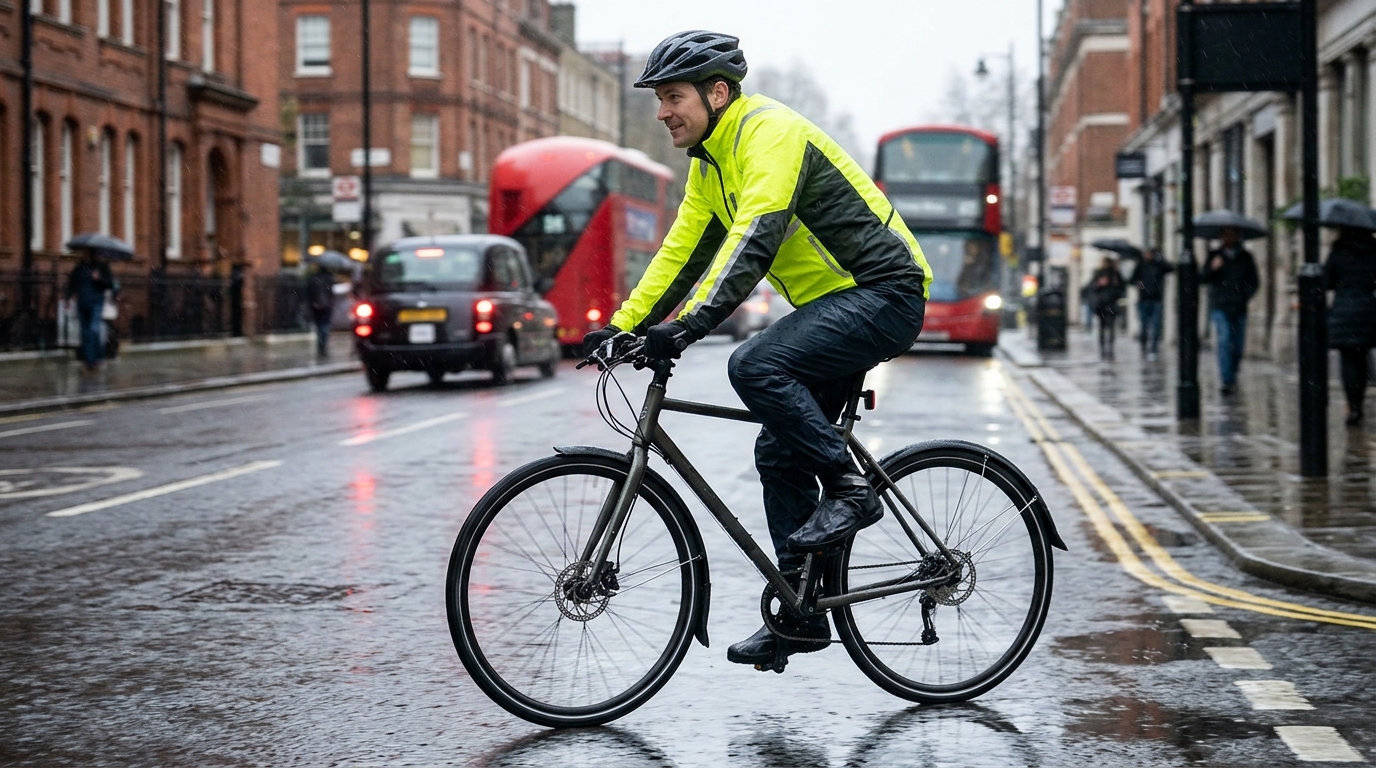
- Waterproof Clothing and Mudguards
London weather can change quickly, and rain can make every day cycling uncomfortable. Wet roads can also reduce grip and increase stopping distances.
A waterproof cycling jacket helps keep your upper body dry, while waterproof trousers and shoe covers provide additional protection during heavy rain.
Mudguards are another useful addition. They reduce the amount of water and dirt thrown onto your clothing by the wheels, particularly when riding through puddles or on wet roads.
Choose clothing that allows you to move comfortably and does not interfere with your ability to control the bicycle.
- A Small First Aid Kit
A compact first aid kit is worth carrying, especially if your daily commute involves longer journeys.
It does not need to contain many items. A few adhesive dressings, antiseptic wipes, gauze pads and small bandages can help you deal with minor cuts and grazes.
Keep the kit in a small pouch inside your backpack or bicycle bag so that it is easy to find when needed.
For serious injuries, contact emergency services rather than relying on a basic first aid kit.
Check Your Safety Equipment before Every Journey
Having the right equipment is important, but it is equally important to make sure everything works properly. A quick check before leaving home can help prevent avoidable problems.
Check that your brakes respond correctly, tyres are properly inflated and lights are working. Make sure your helmet is fitted securely and your bike lock and repair kit are packed.
It is also worth checking the weather forecast and planning your route before setting off. Where possible, use suitable cycle lanes and quieter roads, and leave enough space around other road users.
Small habits like these can make your daily commute more predictable and reduce the chances of encountering problems on the road.
Image Prompt: Checking Bicycle Safety Equipment Before Every Journey
Create a realistic, high-quality photograph showing a cyclist preparing for their daily commute in front of their home. The cyclist should be checking their bicycle before setting off, carefully testing the brake levers, inspecting the tyres and making sure the front and rear lights are switched on. Show a properly fitted cycling helmet, a sturdy bike lock and a small puncture repair kit neatly placed nearby, ready to be packed.
Include a modern commuter bicycle with clearly visible safety features. The cyclist should look focused and organised, demonstrating a simple pre-ride safety routine. Use a clean residential setting with a quiet road or cycle lane in the background to suggest a safe and prepared journey.
Style: Photorealistic, professional cycling blog photography, natural morning light, realistic details, clean composition, landscape 16:9 aspect ratio.
Important: No text, logos, watermarks, labels or arrows. Focus on the cyclist checking essential safety equipment before starting their commute.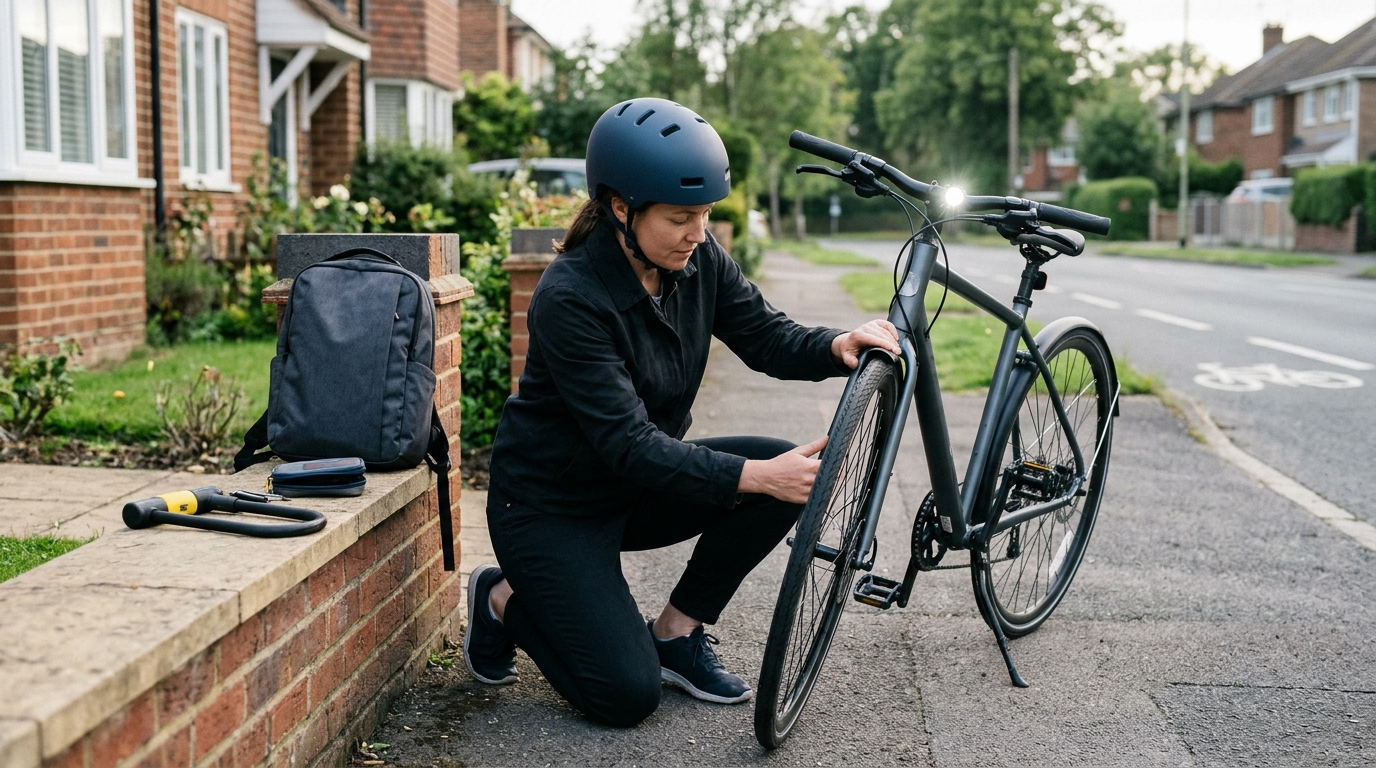
Final Thoughts
Cycling safety is not just about wearing a helmet or using bright lights. It involves choosing suitable equipment, maintaining your bicycle and staying aware of your surroundings. A reliable bike lock, working lights, reflective clothing and a basic repair kit can all make everyday journeys easier and safer.
Whether you are a regular commuter or someone who has recently started cycling around London, investing in the right accessories is a sensible step. At Chelsea Bikes, you can explore a range of bicycles, cycling accessories and essential equipment to support your everyday rides. With the right preparation and reliable equipment, you can enjoy greater confidence on your journeys and make cycling a more practical part of your dai