Buying your first road bike is an exciting step, especially if you are planning to enjoy longer rides, improve your fitness or start cycling regularly. Road bikes are designed to travel efficiently on paved surfaces, making them a popular choice for fitness enthusiasts, commuters and people who enjoy exploring new places on two wheels.
However, choosing the right bicycle can be more difficult than it first appears. There are different frame materials, sizes, gear systems, brake types and price ranges to consider. With so many options available, beginners can easily make mistakes that lead to discomfort, unnecessary spending or a bicycle that does not suit their needs.
Before investing in your first road bike, it is worth understanding what to look for and which common problems to avoid. Here are ten mistakes that can help you make a more confident decision.
Choosing the Wrong Frame Size
One of the most common mistakes beginners make is buying a road bike without checking whether the frame is the correct size. A bicycle that is too large or too small can make riding uncomfortable and affect your control.
Frame size depends on factors such as your height, leg length and riding position. Different manufacturers may also use slightly different sizing systems, so a medium frame from one brand might not fit exactly like a medium from another.
Before purchasing, check the manufacturer’s size guide and, if possible, visit a bicycle shop for a professional fitting. You should be able to reach the handlebars comfortably without stretching too far or feeling cramped.
A correctly sized bicycle makes a noticeable difference to comfort, confidence and overall riding performance.
Buying a Bike Based Only on Its Appearance
A road bike with an attractive design, stylish colours and a lightweight frame can easily catch your attention. However, appearance should not be the main reason for choosing a bicycle.
A bike may look impressive but still have components or a riding position that do not suit your requirements. For example, an aggressive racing bike might not be comfortable for someone who wants relaxed weekend rides.
Think about how you intend to use the bicycle. If you are planning to ride occasionally for fitness, a comfortable endurance road bike may be more suitable than a professional-style racing model.
Always consider comfort, specifications and practicality before making your final decision.
Ignoring the Importance of Frame Material
Road bikes are available with different frame materials, and each has its own advantages.
Aluminium frames are popular because they are generally affordable, relatively lightweight and suitable for everyday cycling. They are often a sensible option for beginners who want good performance without spending too much.
Carbon fibre frames are usually lighter and can be designed to offer excellent stiffness and vibration absorption. However, they are generally more expensive and may not be necessary for someone who is just starting out.
Steel frames are also worth considering. They are known for their durability and can provide a comfortable ride, although they are often heavier than comparable aluminium or carbon models.
Before choosing a frame, consider your budget, riding habits and the type of roads you expect to use.
Spending Too Much on Your First Road Bike
It is tempting to believe that an expensive road bike will automatically provide a better cycling experience. While higher-priced models often include upgraded components and lighter materials, beginners do not necessarily need the most expensive option.
Your first road bike should match your current experience and requirements. Spending too much before understanding your riding preferences can lead to unnecessary expenses.
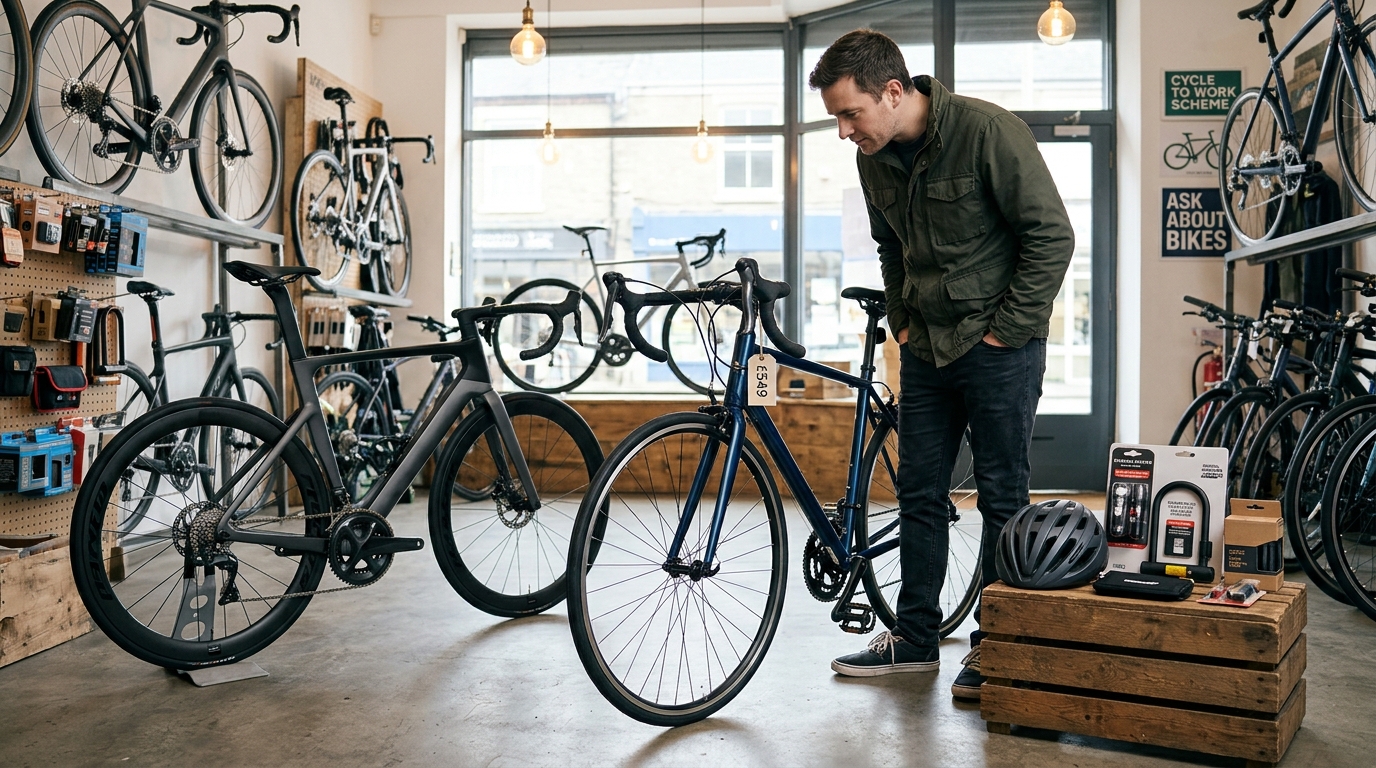
It is also important to leave some money aside for essential accessories. A good helmet, front and rear lights, a reliable lock, a repair kit and a spare inner tube can all be useful additions.
Set a realistic budget before visiting a shop and compare different models within youprice range. A reasonably priced bicycle with suitable specifications can be an excellent starting point.
Overlooking the Gear System
The gear system plays an important role in how easily you can ride on different types of roads. It allows you to adjust your pedalling effort when climbing hills, riding on flat surfaces or travelling at higher speeds.
Some beginners focus only on the number of gears without understanding how the gearing actually works. Having more gears does not automatically mean a bicycle will be better.
Instead, pay attention to the available gear ratios and whether they suit your usual routes. If you expect to ride through hilly areas, lower gearing can make climbing more manageable.
You should also check that the gear changes feel smooth and that the shifters are comfortable to operate.
Choosing the Wrong Type of Brakes
Road bikes commonly use rim brakes or disc brakes. Both systems have advantages, but choosing between them requires some consideration.
Rim brakes work by applying pressure to the wheel’s braking surface. They are generally lightweight, straightforward and often less expensive.
Disc brakes use a rotor attached to the wheel hub and a caliper to create braking force. They can provide consistent stopping performance in wet conditions and are increasingly common on modern road bikes.
Mechanical and hydraulic disc brakes are also different. Mechanical systems use cables, while hydraulic systems use fluid to transfer braking force.
For beginners who expect to ride throughout the year, disc brakes may be worth considering. However, the best choice depends on your budget, riding conditions and maintenance preferences.
Forgetting to Test Ride the Bicycle
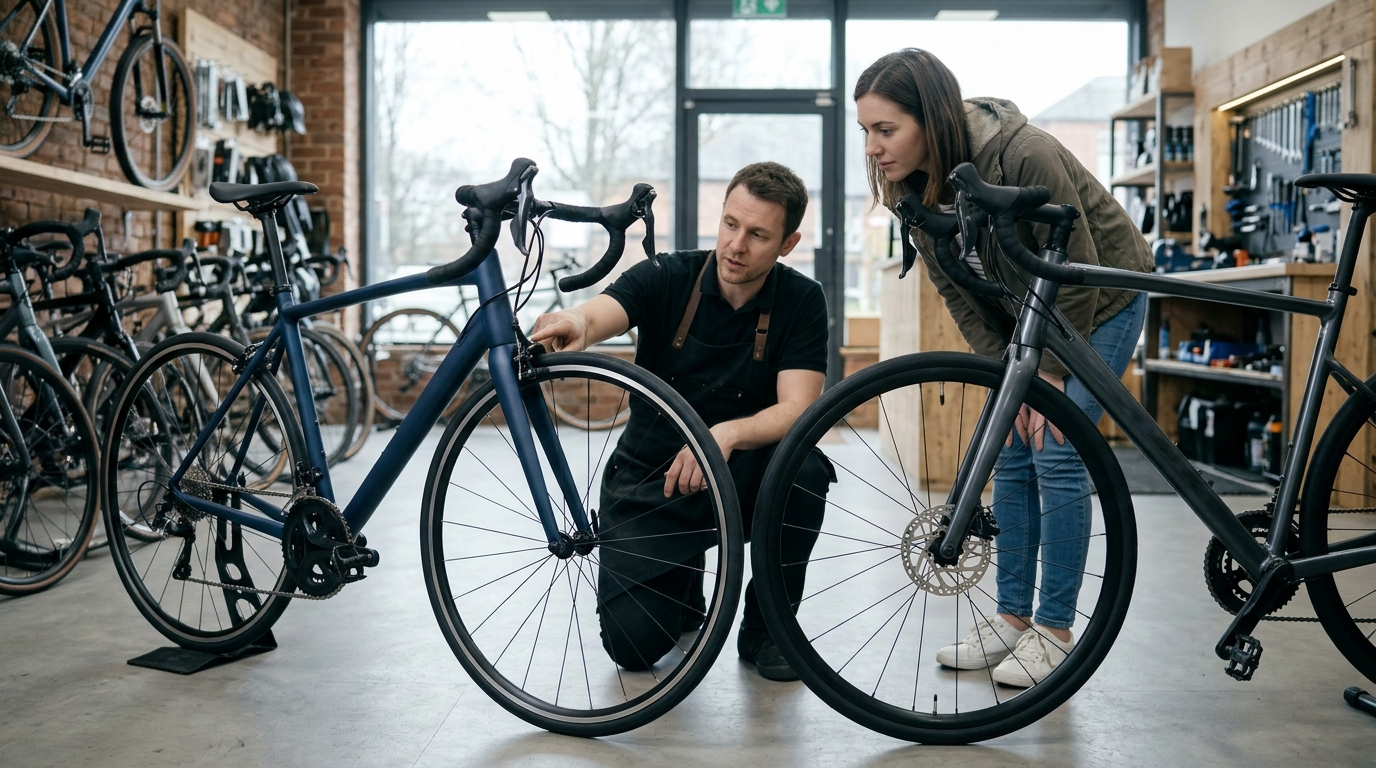
Buying a road bike without trying it first can be a costly mistake. Even if the specifications look perfect, the bicycle might not feel comfortable once you start riding.
A test ride gives you an opportunity to check the riding position, handlebar reach, saddle comfort and steering response. You can also see whether the gears and brakes operate smoothly.
Pay attention to how your body feels during the ride. You should not experience excessive stretching, difficulty reaching the brakes or unusual discomfort.
If you are buying online and cannot arrange a test ride, check the retailer’s sizing advice and returns policy carefully before placing your order.
Ignoring the Quality of Tyres and Wheels
Tyres and wheels have a direct effect on how a road bike feels. They influence rolling resistance, comfort, grip and handling.
Some beginners assume that every road bike comes with equally good tyres and wheels. In reality, specifications can vary significantly between models.
Check the tyre width and consider the type of roads you will be riding on. Narrower tyres are traditionally associated with road cycling, but wider road tyres can offer additional comfort and grip, depending on the frame and wheel clearance.
You should also inspect the wheels to make sure they are properly aligned and spin freely. Reliable tyres and well-maintained wheels can make every day riding more enjoyable.
Not Considering Maintenance Costs
The purchase price is not the only expense involved in owning a road bike. Like any bicycle, it needs regular care to remain safe and perform properly.
The chain requires cleaning and lubrication, brake pads gradually wear down, tyres may need replacing and gears sometimes require adjustment.
If you ride frequently, these maintenance tasks become particularly important. Ignoring them can lead to poor performance and more expensive repairs later.
Before buying, consider the availability and cost of replacement parts. It is also useful to find a reliable bicycle workshop where you can arrange servicing when needed.
Learning a few basic maintenance skills will help you look after your bike and save money over time.
Buying Without Thinking about Your Future Riding Needs
Your first road bike should not only suit your current cycling habits. It should also be suitable for the type of riding you may want to do in the future.
You might begin with short weekend rides but later become interested in longer distances, group cycling or organised cycling events. Choosing a bicycle that offers enough versatility can help you avoid upgrading too soon.
Consider factors such as mounting points for bottle cages, tyre clearance, gearing options and the possibility of adding useful accessories.
You do not need to buy a professional racing bicycle to prepare for future progress. A well-chosen road bike can support your development as a cyclist while remaining practical for everyday use.
Final Thoughts
Buying your first road bike does not have to be complicated. The key is to focus on the things that genuinely matter, including frame size, comfort, suitable components, braking performance and your budget. Take your time to compare different models, ask questions and test ride a bicycle whenever possible. Avoiding these common mistakes can help you choose a bike that feels right and gives you confidence on the road. If you are looking for a suitable road bike or need advice before making your purchase, Chelsea Bikes is a great place to explore your options and find a bicycle that matches your cycling needs. The right choice can make every ride more enjoyable and encourage you to keep discovering the benefits of cycling.