Cycling After Dark: How to Stay Visible on London’s Roads
Cycling after dark is a normal part of life for many people in London. Commuters ride home from work, students travel between classes, and others use their bikes for shopping or evening exercise. However, riding at night brings extra challenges. Busy roads, poor lighting, wet surfaces and heavy traffic can make it harder for cyclists to see clearly and for other road users to notice them.
Staying visible is one of the most important parts of cycling safely after sunset. With the right lights, reflective clothing and a few sensible habits, you can make your journeys safer and more comfortable.
- Use Bright Front and Rear Bike Lights
Bike lights are essential when riding after dark. A front light helps you see the road ahead, while a rear light makes you more visible to drivers, pedestrians and other cyclists approaching from behind.
In the UK, cyclists must use a white front light and a red rear light between sunset and sunrise. These lights must meet the relevant legal requirements. Reflectors are also important, including a red rear reflector where required.
Choose lights that provide enough illumination for the roads you use. If you mainly ride through well-lit streets in central London, a light that helps other people see you may be sufficient. For darker roads and poorly lit cycle routes, a more powerful front light can help you spot potholes, uneven surfaces and other hazards.
Check your lights before every evening journey. Make sure they are charged, securely attached and pointing in the right direction. Carrying a spare set or a backup light is also useful if you cycle regularly after dark.
- Wear Reflective and Bright Clothing
Dark clothing can make cyclists difficult to spot at night, particularly on roads with limited street lighting. A black jacket may feel comfortable, but it can blend into the surroundings when headlights are shining from different directions.
Reflective clothing helps solve this problem by bouncing light back towards its source. A reflective vest, jacket, ankle band or backpack cover can make a noticeable difference. Bright colours, such as fluorescent yellow, orange and green, are useful during daylight and poor weather, while reflective materials are particularly valuable after dark.
Pay attention to your legs and feet as well. Reflective ankle bands can help drivers recognise the movement of your legs when you pedal. This movement may make it easier for other road users to identify you as a cyclist.
You do not need to replace your entire cycling wardrobe. Adding a few reflective items to the clothes you already wear can improve your visibility without making your journey uncomfortable.
- Make Sure Your Lights Are Positioned Correctly
Even a good bike light will not help much if it is pointing in the wrong direction. A front light aimed too high can dazzle oncoming road users, while one aimed too low may not illuminate enough of the road ahead.
Position your front light so that it lights the path in front of you without shining directly into the eyes of drivers or pedestrians. Check the angle while sitting on your bike, as the beam may change when your weight is on the saddle.
Your rear light should be clearly visible from behind and should not be blocked by a bag, coat or luggage rack. If you use pannier bags, make sure they do not cover the light or rear reflector.
It is worth checking your lights from a short distance before setting off. Ask someone to stand behind your bike while you check that the rear light is visible. A quick inspection can prevent problems later in the journey.
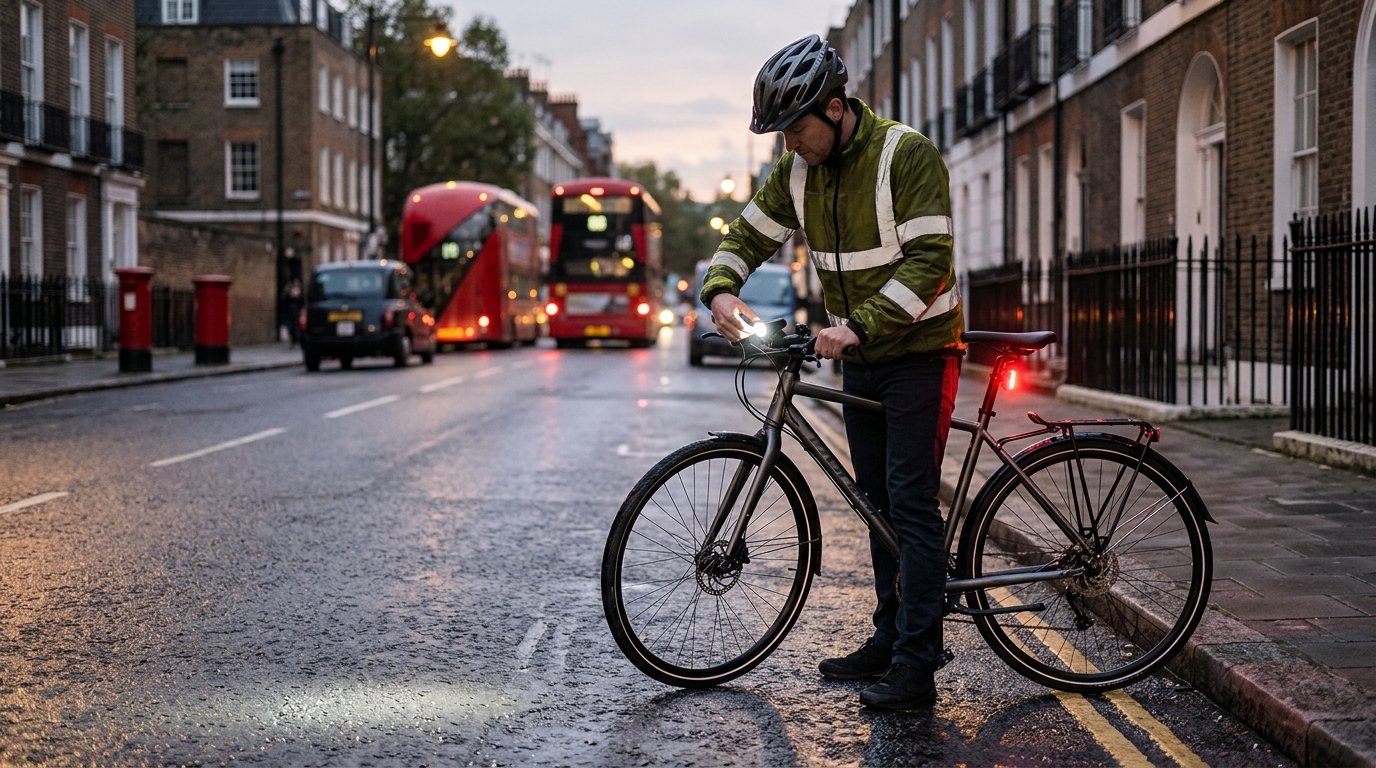
- Keep Your Bike Clean and Well Maintained
A poorly maintained bike can create additional risks when visibility is already limited. Dirty lights, worn tyres and weak brakes may affect your ability to react to unexpected situations.
Clean your front and rear lights regularly, especially during London’s wet weather. Road spray and mud can cover their lenses, reducing the amount of light they produce. Make sure your brakes work properly and your tyres have enough tread and the correct pressure for your bike.
Reflectors should also be kept clean and securely attached. If a reflector is cracked, missing or covered by dirt, replace or clean it as needed.
Check your chain, gears and other moving parts as part of your regular maintenance routine. A bike that works properly is easier to control when you need to slow down, avoid an obstacle or stop suddenly.
If your brakes feel weak, your lights are damaged or your bike develops an unusual problem, have it checked before relying on it for regular night journeys.
- Be Extra Careful in Wet Weather
Rain is common in London, and wet roads can make evening cycling more difficult. Water on the road reflects streetlights and vehicle headlights, sometimes creating glare that makes it harder to judge distances. Rain can also reduce visibility for everyone using the road.
When conditions are wet, reduce your speed and leave more room between yourself and other vehicles. Brake earlier and more gently, as wet surfaces can increase stopping distances. Take extra care around painted road markings, metal drain covers and tram-style rails where present, as these can become slippery.
Keep your lights switched on even when streetlights make the road appear bright. Wear a waterproof jacket with reflective details and consider using mudguards to reduce the amount of water thrown onto your clothing and lights.
Before setting off, wipe away any water or dirt covering your lights. If heavy rain makes it difficult to see clearly, choose a quieter route or wait until conditions improve.
- Stay Out of Vehicle Blind Spots
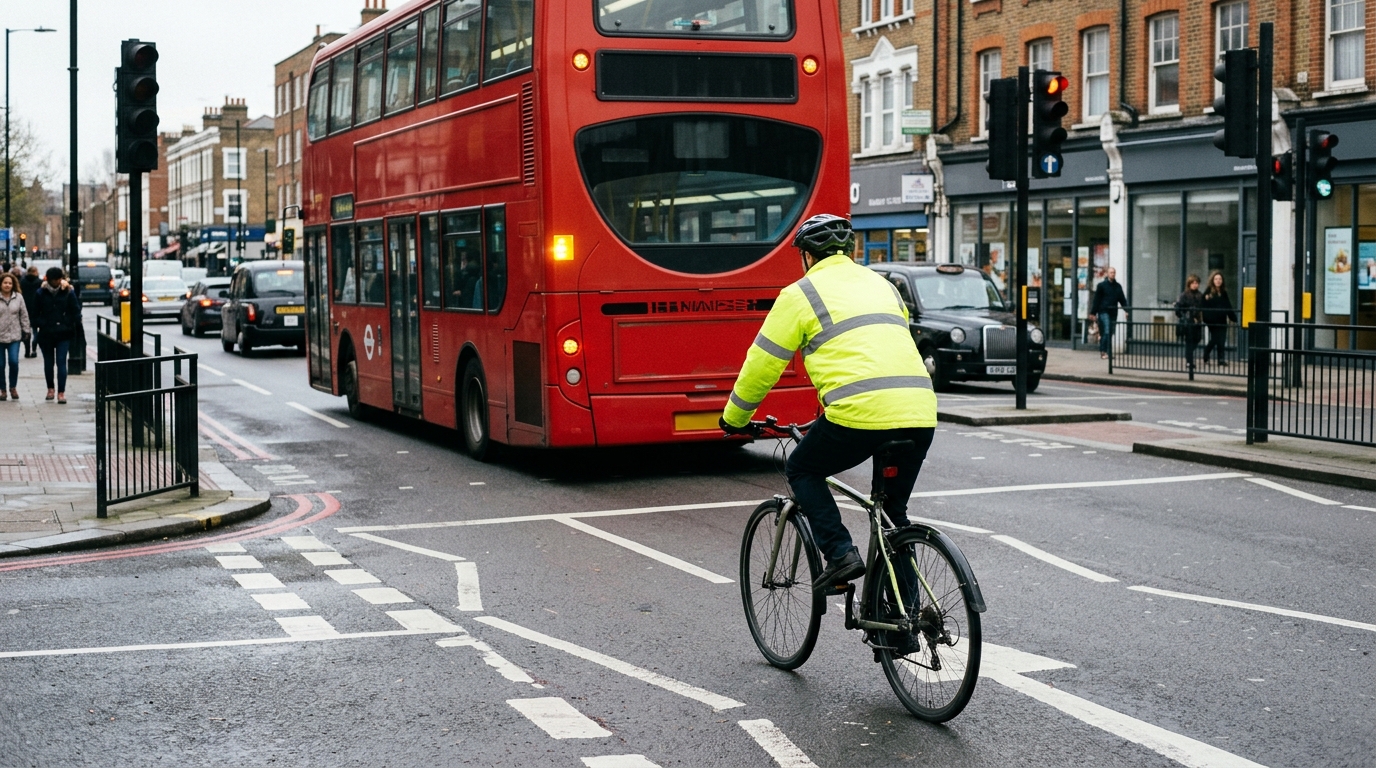
Large vehicles, including buses, lorries and delivery vans, have blind spots where their drivers may not see a cyclist. These areas can be especially dangerous at junctions, where vehicles may turn across a cyclist’s path.
Avoid riding directly alongside a large vehicle for longer than necessary. Never assume that the driver has seen you simply because you can see the vehicle’s mirrors.
Keep a safe distance and avoid squeezing between a turning vehicle and the kerb. If a bus or lorry is indicating to turn, slow down and allow it to complete the manoeuvre rather than trying to pass.
At junctions, position yourself where you are visible and give yourself enough room to react. Good lighting and reflective clothing help, but they cannot guarantee that every driver will notice you. Staying alert and giving large vehicles space remains essential.
- Choose Well-Lit Routes
The shortest route is not always the safest route after dark. A quiet road with good street lighting and clearly marked cycle lanes may be a better choice than a poorly lit shortcut through an unfamiliar area.
When planning your journey, look for roads with suitable cycling facilities, clear visibility and manageable traffic. Familiar routes can also help because you are more likely to know where junctions, potholes and difficult crossings are located.
London has many dedicated cycle routes, but conditions vary from one area to another. Check your route before leaving, especially if you are travelling somewhere new. Avoid making sudden turns or checking your phone while moving.
Stay aware of your surroundings, particularly near parked vehicles, where someone may open a car door unexpectedly. Leave enough space from parked cars to reduce the risk of being struck by an opening door.
- Use Reflectors and Additional Visibility Accessories
Bike lights are important, but they should not be your only method of improving visibility. Reflectors and other reflective accessories can help drivers notice you from different angles.
Depending on your bike and equipment, useful options include pedal reflectors, spoke reflectors, reflective wheel details and reflective strips on your clothing or helmet. Reflective ankle bands can also make your pedalling movement easier to recognise.
A reflective backpack cover is particularly useful for commuters who carry bags to work or college. If you use a child seat, trailer or panniers, check that your lights and reflectors remain visible with everything fitted.
Remember that reflective materials work best when light shines on them. They do not replace powered lights, so use the appropriate combination of lights and reflectors for your journey.
- Ride Predictably and Communicate Clearly
Being visible also means making your intentions clear. Drivers and pedestrians need enough time to understand what you are doing, particularly at busy London junctions.
Signal before turning when it is safe to do so, and check behind you before changing position. Keep both hands available for controlling the bike whenever possible, and avoid sudden movements.
Follow traffic signals and road signs, and do not assume that another road user will give way. Make eye contact where possible, but never rely on it as proof that a driver has seen you.
Avoid using headphones at a volume that prevents you from hearing traffic around you. Keep your attention on the road and watch for pedestrians stepping into cycle lanes, vehicles pulling away from the kerb and other cyclists approaching from behind.
A steady speed, clear signals and sensible road positioning make your movements easier for others to anticipate.
- Build a Night-Cycling Safety Routine
A simple routine before every evening ride can help you avoid common problems. Check your lights, inspect your brakes and tyres, and make sure reflective items are clean and visible. Charge your lights before they run out of power, rather than waiting until they stop working.
Plan your route in advance and allow extra time if the weather is poor. Carry a basic repair kit, a suitable lock and a charged phone for emergencies. If your journey is long, consider taking a backup light.
Most importantly, ride at a speed that allows you to stop safely within the distance you can see ahead. Even a powerful front light cannot make every road hazard obvious, particularly in heavy rain or on unfamiliar roads.
Conclusion
Cycling after dark can be a practical and enjoyable way to travel around London, provided you take visibility seriously. Working front and rear lights, reflective clothing, a well-maintained bike and careful route planning all help reduce avoidable risks. Combine these precautions with predictable riding and extra care around buses, parked cars and busy junctions.
Whether you commute every day or enjoy an occasional evening ride, having the right equipment makes a real difference. If you need a bike light, reflective accessory, safety equipment or help keeping your bicycle in good condition, Chelsea Bikes can help you find suitable cycling essentials for your needs. Before your next night ride, take a few minutes to check your bike and make sure you are ready to be seen on London’s roads.