British winters can be challenging for cyclists. Cold temperatures, heavy rain, strong winds, muddy roads and occasional icy conditions can make cycling more difficult than usual. During this season, bicycles are exposed to moisture, road salt and dirt, which can affect their performance and cause different parts to wear out more quickly. Without proper care, even a well-maintained bicycle can develop problems that make winter journeys uncomfortable or unsafe.
However, winter does not mean you have to stop cycling. With a little preparation and regular maintenance, you can keep your bicycle in good condition and enjoy riding throughout the colder months. Whether you cycle to work, travel around your local area or enjoy weekend rides, preparing your bicycle for winter can make a significant difference.
Here are some practical ways to get your bicycle ready for the British winter.
- Check Your Tyres Before Winter Arrives
Your bicycle tyres are the only parts that remain in direct contact with the road, so they play an important role in maintaining grip and stability. During winter, wet leaves, muddy surfaces, puddles and slippery roads can increase the risk of losing control.
Start by checking your tyres for cuts, cracks, worn tread and embedded objects. If the rubber looks damaged or the tread has become too worn, consider replacing the tyres before winter conditions become worse.
You should also check the tyre pressure regularly. Riding with slightly lower pressure within the manufacturer’s recommended range can sometimes improve grip on wet surfaces. However, avoid underinflating your tyres, as this can increase the risk of punctures and damage.
If you regularly ride on poorly maintained roads or muddy paths, consider choosing tyres designed for better puncture protection and wet-weather performance.
2. Clean and Lubricate Your Bicycle Chain
Rainwater, mud and road salt can quickly build up around your bicycle’s chain and drivetrain during winter. This dirt can increase friction, cause premature wear and make pedalling feel harder.
A clean and properly lubricated chain helps your bicycle run smoothly and reduces unnecessary damage to expensive components.
After riding in wet or muddy conditions, wipe the chain with a clean cloth to remove excess moisture and dirt. If it is particularly dirty, use a suitable bicycle chain cleaner or degreaser. Once the chain is clean and dry, apply a bicycle-specific wet-weather lubricant.
Wet lubricants are generally more suitable for rainy winter conditions because they stay on the chain for longer. However, they can attract dirt, so regular cleaning is important. Remove any excess lubricant with a cloth to prevent dirt from collecting around the drivetrain.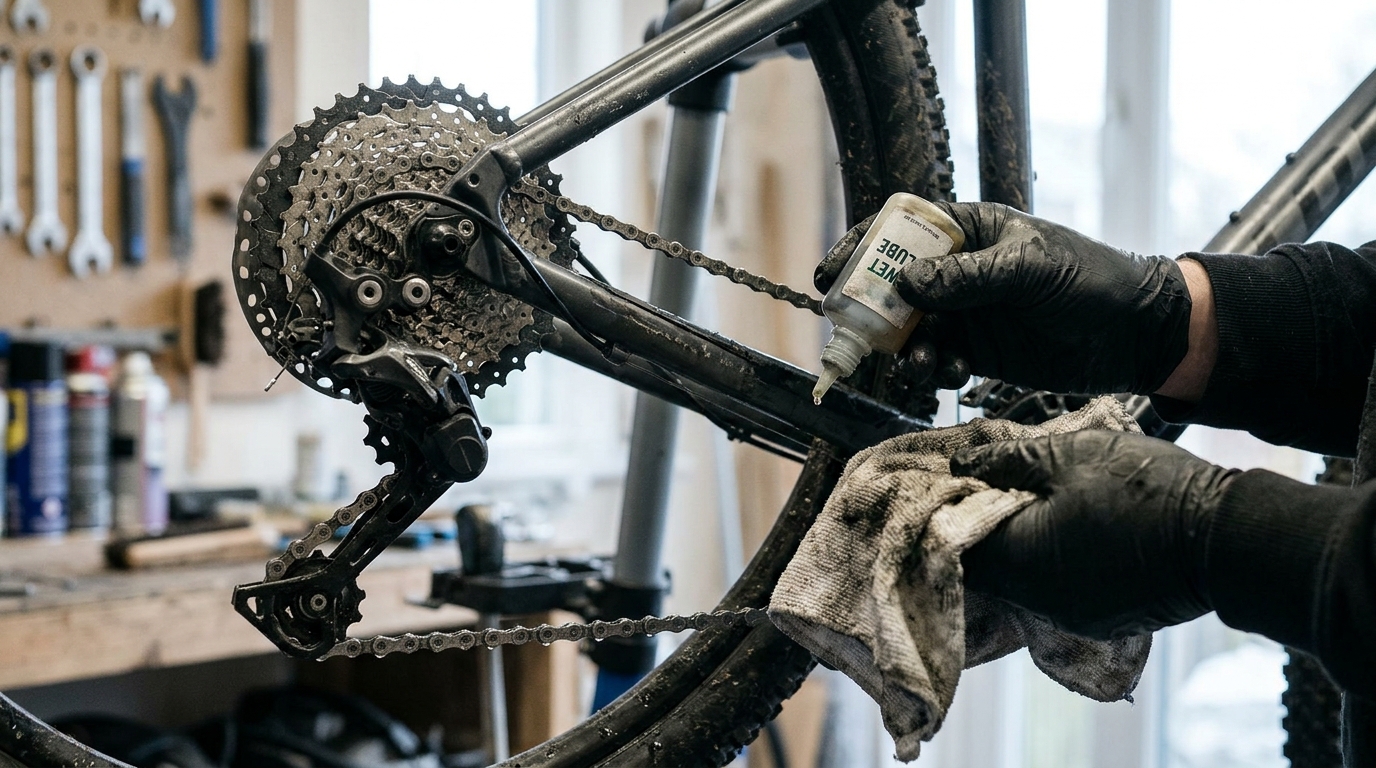
3. Inspect Your Brakes Carefully
Good brakes are essential throughout the year, but they become even more important during the British winter. Rain, mud and road debris can reduce braking performance and increase stopping distances.
Before winter begins, inspect your brake pads for signs of excessive wear. If you use rim brakes, check that the pads are correctly positioned and that the wheel rims are clean. For disc brakes, inspect the pads and rotors for contamination or damage.
Test your brakes before every ride to make sure they respond properly. If you notice unusual noises, reduced braking power or a spongy feeling in the brake levers, arrange an inspection.
Never ignore brake problems. Replacing worn brake pads or having your braking system serviced can help you maintain better control when travelling on wet roads.
4. Protect Your Bicycle from Rust and Corrosion
One of the biggest problems cyclists face during winter is corrosion. Constant exposure to rain, moisture and road salt can damage metal components, especially when a bicycle is left outside or stored in a damp location.
Pay particular attention to the chain, gears, bolts, cables and other exposed metal parts. Clean your bicycle regularly and dry it properly after riding in wet conditions.
You can also use suitable protective products on compatible metal components to reduce the risk of corrosion. Avoid applying oil or protective sprays to brake pads, braking surfaces or tyres, as this can affect their performance.
If possible, store your bicycle indoors in a dry and well-ventilated area. A garage, shed or dedicated indoor storage space can help protect it from harsh weather.
5. Make Sure Your Lights Are Working Properly
Shorter days and darker evenings are a normal part of the British winter. You may find yourself cycling in poor visibility, especially when travelling early in the morning or returning home after sunset.
Working front and rear lights are essential for helping other road users see you. Check that your front light provides enough illumination and that your rear light is clearly visible from behind.
Rechargeable lights should be fully charged before longer journeys. If you use battery-powered lights, keep spare batteries available.
It is also worth carrying a small set of backup lights in case your main lights stop working during a journey. Reflective clothing, reflective ankle bands and accessories can provide additional visibility, particularly on poorly lit roads.
6. Choose Suitable Winter Clothing
Preparing your bicycle is important, but choosing the right clothing can make winter cycling much more comfortable.
The weather can change quickly in the UK, so wearing several lightweight layers is often more practical than relying on one thick jacket. A breathable base layer helps manage sweat, while an insulating middle layer provides warmth. A waterproof and wind-resistant outer layer offers protection against rain and cold winds.
Your hands, feet and head also need attention. Waterproof cycling gloves can help keep your hands warm and improve your grip on the handlebars. Thermal socks and suitable overshoes can protect your feet from cold and wet conditions.
A lightweight neck warmer and a cycling cap that fits comfortably under your helmet can also make a noticeable difference during colder rides.
7. Check Your Gears and Cables
Cold weather and moisture can affect your bicycle’s gear system. Dirt can collect around the cassette, derailleur and gear cables, making shifting less accurate.
Before the winter season, check whether your gears change smoothly. Listen for unusual clicking noises and look for signs of stretched, frayed or damaged cables.
Clean the drivetrain and inspect the derailleur to ensure everything is working correctly. If your gears skip, hesitate or struggle to shift, the system may need adjustment.
It is better to deal with these problems before they become worse. A properly functioning gear system makes cycling easier, particularly when climbing hills or riding against strong winter winds.
8. Keep Your Bicycle Mudguards in Good Condition
Mudguards are particularly useful during the British winter because wet roads can cover your clothing and bicycle with dirty water.
Front and rear mudguards help reduce the amount of water, mud and road debris thrown towards you while riding. They can also help protect important bicycle components from excessive dirt.
Check that your mudguards are securely attached and do not rub against the tyres. Loose fittings can create irritating noises and may become a safety concern.
If your bicycle does not have mudguards, consider installing a suitable set before the wet weather arrives. Full-length mudguards generally offer better coverage for regular commuters.
9. Store Your Bicycle Properly After Every Ride
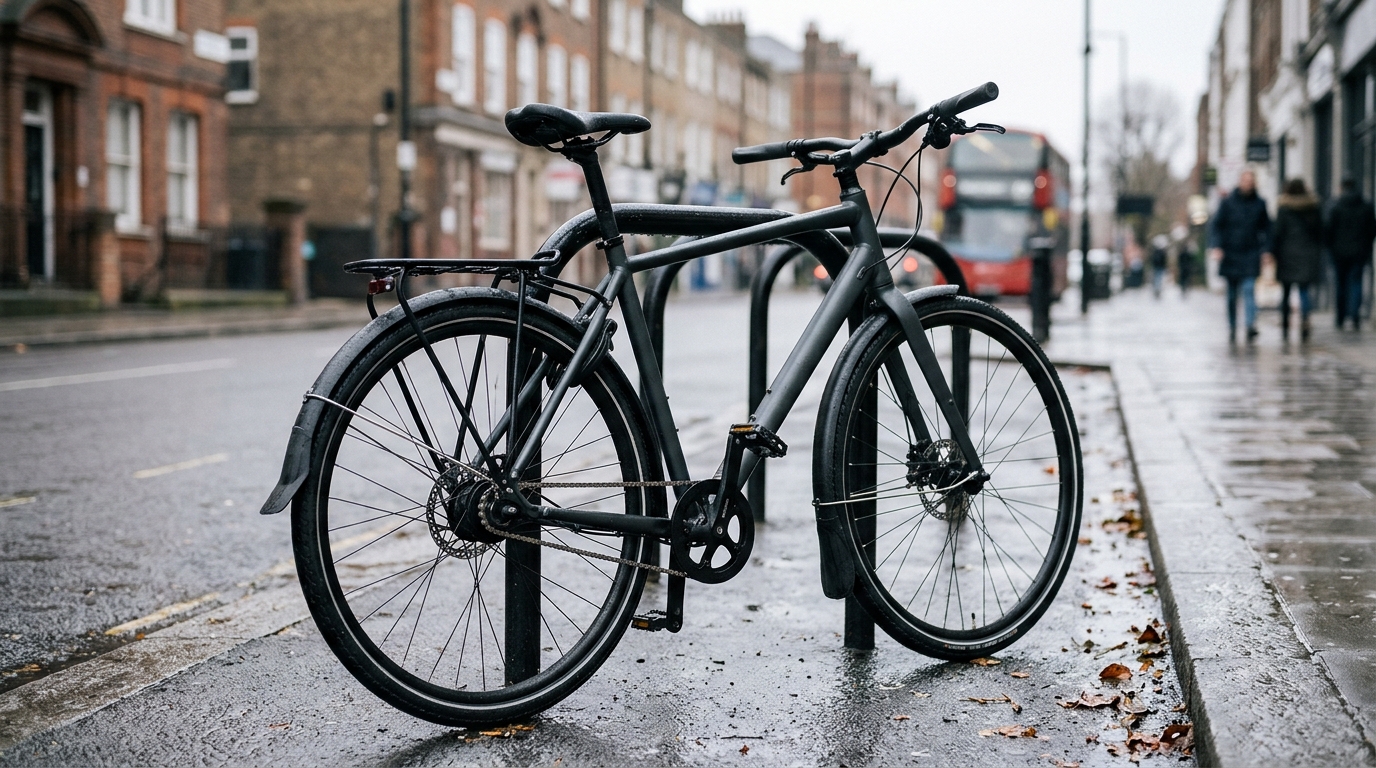
Proper storage can help prevent many winter-related bicycle problems. Leaving a wet bicycle outside for long periods increases its exposure to moisture, dirt and corrosion.
After a rainy ride, use a clean cloth to remove water from the frame, handlebars, chain and other exposed components. Pay particular attention to areas where water and dirt tend to collect.
Allow your bicycle to dry before covering it. Avoid storing it in a completely sealed, damp space because trapped moisture can contribute to corrosion.
If you live in a flat or have limited storage space, a suitable indoor bicycle stand or wall-mounted rack can help keep your bicycle off the floor and away from damp areas.
10. Prepare for Unexpected Winter Conditions
Even with regular maintenance, winter journeys can be unpredictable. Strong winds, heavy rainfall, icy patches and sudden temperature changes may affect your route and riding conditions.
Carry a basic repair kit containing spare inner tubes, tyre levers, a compact pump and a suitable multi-tool. These items can help you deal with common problems while travelling.
Plan your journeys carefully and allow extra time when road conditions are poor. Reduce your speed on wet surfaces, avoid sudden braking and take extra care when turning.
Be particularly cautious around painted road markings, metal drain covers, wet leaves and icy patches. If conditions become too dangerous, it is better to find a safe alternative than to continue riding.
Conclusion
Preparing your bicycle for the British winter does not have to be complicated. Regular cleaning, proper lubrication, reliable brakes, suitable tyres and working lights can help keep your bicycle in good condition throughout the colder months. Choosing appropriate clothing and storing your bicycle correctly will also make winter cycling more comfortable.
A little attention before and after each ride can prevent minor problems from becoming expensive repairs. Whether you are a daily commuter or an occasional cyclist, taking care of your bicycle will help you enjoy safer and more reliable journeys during winter. For quality bicycle maintenance, servicing advice and cycling support, Chelsea Bikes can help you keep your bicycle ready for the challenges of the British winter.