How to Carry Groceries on a Bicycle without Affecting Balance
Cycling is a convenient way to travel around town, visit local shops and complete everyday errands. For many people in the UK, a bicycle is not just a way to exercise or commute to work. It is also a practical option for collecting groceries without relying on a car or public transport. However, carrying shopping while riding requires some planning, particularly when transporting heavier items.
An unevenly loaded bicycle can affect balance, steering and braking. A bag hanging from one handlebar or a heavy backpack can make the bicycle feel unstable, especially when turning or riding over uneven surfaces. Fortunately, there are several ways to carry groceries safely without making your journey uncomfortable.
Whether you use a hybrid, mountain, folding or electric bicycle, choosing the right carrying equipment and distributing the weight properly can make shopping trips much easier.
- Use a Rear Bicycle Rack for Heavier Shopping
A rear bicycle rack is one of the most practical ways to carry groceries. It attaches to the rear of the bicycle frame and provides a stable platform for transporting bags, panniers and other everyday items.
Unlike carrying shopping on your back, a rear rack transfers the weight to the bicycle itself. This can make longer journeys more comfortable, particularly when you have several items to transport.
When choosing a rear rack, check that it is compatible with your bicycle frame and can support the weight you intend to carry. Some racks are designed for lighter loads, while others are suitable for heavier shopping and commuting equipment.
Make sure the rack is securely fitted before using it. Loose mounting bolts can cause movement while riding, so check the fittings regularly.
- Choose Pannier Bags Instead of Handlebar Bags
Pannier bags are designed to attach to the sides of a bicycle rack. They are particularly useful for grocery shopping because they provide separate storage areas and help distribute weight evenly.
Using two pannier bags allows you to divide your shopping between both sides of the rear wheel. This creates a more balanced load than placing everything in one bag.
For example, you could carry heavier items such as tins, bottles and packaged food in one pannier while placing lighter groceries in the other. Try to keep the weight reasonably similar on both sides.
Look for pannier bags with secure attachment systems, strong materials and sufficient capacity for your usual shopping trips.
Water-resistant or waterproof panniers are also useful in the UK, where unexpected rain can occur throughout the year.
- Avoid Hanging Heavy Bags from the Handlebars
Hanging shopping bags from the handlebars might seem like a quick solution, particularly when travelling a short distance. However, it can create serious handling problems.
When a heavy bag hangs from one side, it pulls the handlebars in that direction. This can make steering unpredictable, especially when turning, slowing down or travelling over uneven road surfaces.
Plastic shopping bags can also move around, become tangled with brake cables or interfere with the front wheel.
For these reasons, avoid carrying heavy grocery bags directly from the handlebars. If you regularly shop by bicycle, consider investing in a suitable front basket or rear pannier system instead.
- Consider a Front Bicycle Basket for Lighter Items
A front bicycle basket is another useful option for carrying everyday shopping. It provides easy access to groceries and can be particularly convenient for smaller purchases.
Baskets are available in different materials, including metal, plastic and wicker-style designs. Some attach directly to the handlebars, while others connect to the bicycle frame or front carrier.
A basket is suitable for lighter items such as bread, fruit, vegetables and small shopping bags. However, placing too much weight at the front can affect steering and make the bicycle harder to control.
Always check the basket’s weight limit and mounting instructions. Keep heavier items in a suitable rear carrying system whenever possible.
- Distribute the Weight Evenly
The way you arrange your groceries is just as important as the equipment you use.
Placing all the heavy items on one side of the bicycle can create an uneven load. This may affect how the bicycle handles, particularly when cornering or riding at lower speeds.
Try to follow a few simple principles:
- Divide heavier items between both pannier bags.
- Place heavier groceries towards the bottom of the bags.
- Keep lighter items towards the top.
- Avoid allowing shopping bags to hang loosely.
- Keep the load centred and securely attached.
- Do not carry more weight than your rack or basket can support.
A balanced load helps the bicycle feel more predictable and reduces unnecessary movement while riding.
- Use a Strong and Comfortable Bicycle Backpack
A bicycle backpack can be useful when carrying a small amount of shopping. It is particularly practical for people who do not want to install a rear rack or basket.
Choose a backpack with adjustable shoulder straps, a comfortable back panel and a secure fastening system. Some cycling backpacks also include chest and waist straps to help keep the load stable.
However, backpacks are not ideal for carrying large or heavy grocery loads. Additional weight on your back can make riding uncomfortable and affect your posture.
If you only need to collect a few lightweight items, a backpack may be sufficient. For regular shopping trips, a rear rack and pannier bags are generally more practical.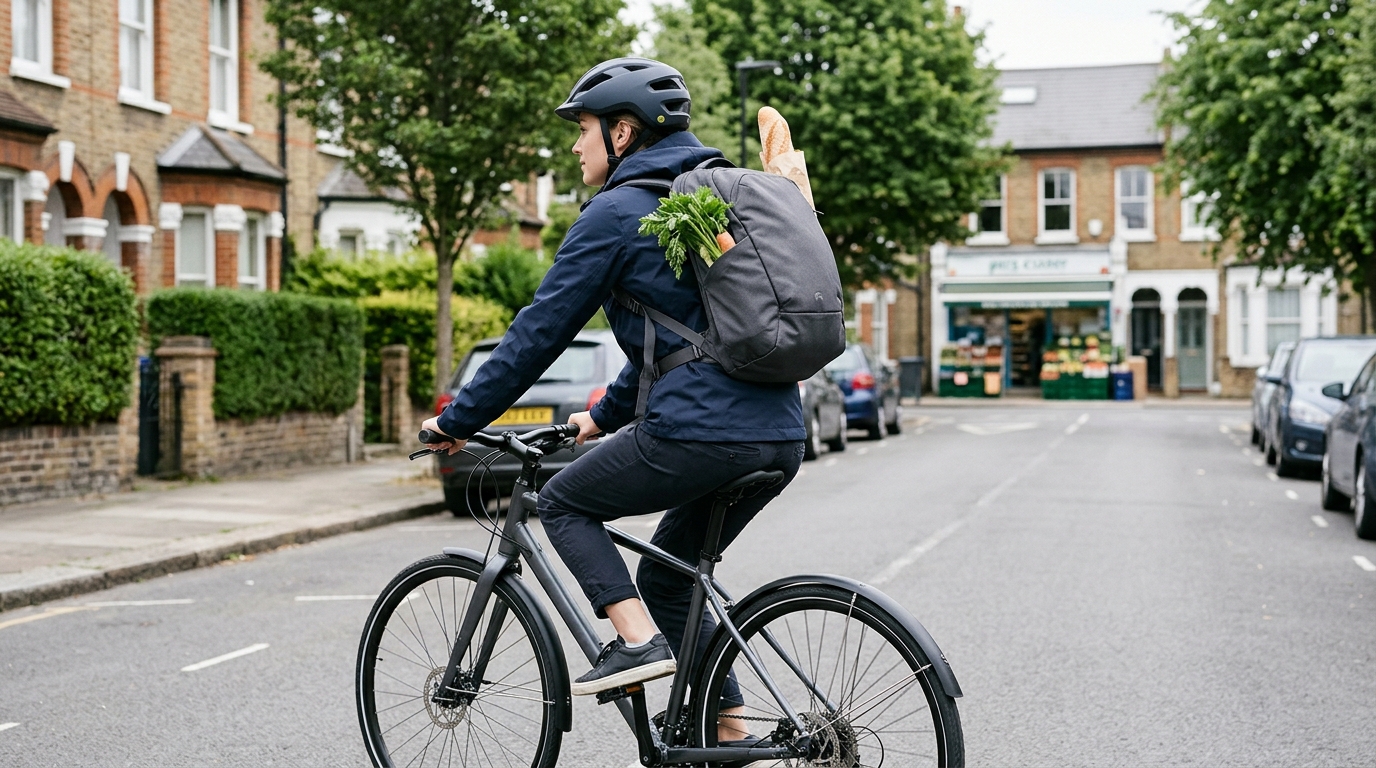
- Secure Fragile and Liquid Items Properly
Groceries often include items that can easily become damaged during a bicycle journey. Eggs, glass bottles, milk containers and soft fruit require particular care.
Placing these items loosely inside a pannier can lead to spills or breakages when travelling over potholes and uneven surfaces.
Use smaller storage compartments, reusable shopping bags or padded sections to keep delicate products separate.
For liquids, make sure bottle lids are properly closed and containers are stored upright where possible. Keep eggs and other fragile groceries away from heavier items.
It is also worth checking that your pannier bags are properly fastened before setting off. A secure load is less likely to move around during the journey.
- Check Your Bicycle before Setting Off
Carrying additional weight places extra demands on your bicycle. Before leaving home, take a few moments to check that everything is working properly.
Pay particular attention to:
Tyre pressure: Check that both tyres are inflated within the recommended pressure range printed on their sidewalls. The correct pressure helps maintain handling and reduces the risk of pinch punctures.
Brakes: Test both brakes to make sure they provide reliable stopping power. A heavier bicycle may require more braking distance.
Wheels: Check that both wheels are securely fitted and do not have noticeable wobbling or damage.
Rack and basket fittings: Make sure all mounting bolts, clips and fasteners are secure.
Tyre clearance: Check that bags, straps and other items cannot come into contact with the wheels, spokes or pedals.
These checks are particularly important if you regularly use your bicycle for shopping or commuting.
- Adjust Your Riding Style When Carrying Groceries
Even with suitable storage equipment, a bicycle can feel different when carrying additional weight. Taking a little more care while riding can help you remain in control.
Start slowly and allow yourself time to get used to the added load. Avoid sudden steering movements, sharp turns and aggressive braking.
When approaching junctions or traffic lights, reduce your speed gradually. Give yourself extra space when stopping, particularly if you are carrying heavier shopping.
Try to avoid riding over potholes, kerbs and rough surfaces at speed. These can cause groceries to move around and place additional stress on the bicycle’s wheels and carrying equipment.
If you are using panniers for the first time, practise riding with a small load in a quiet area before heading into busy traffic.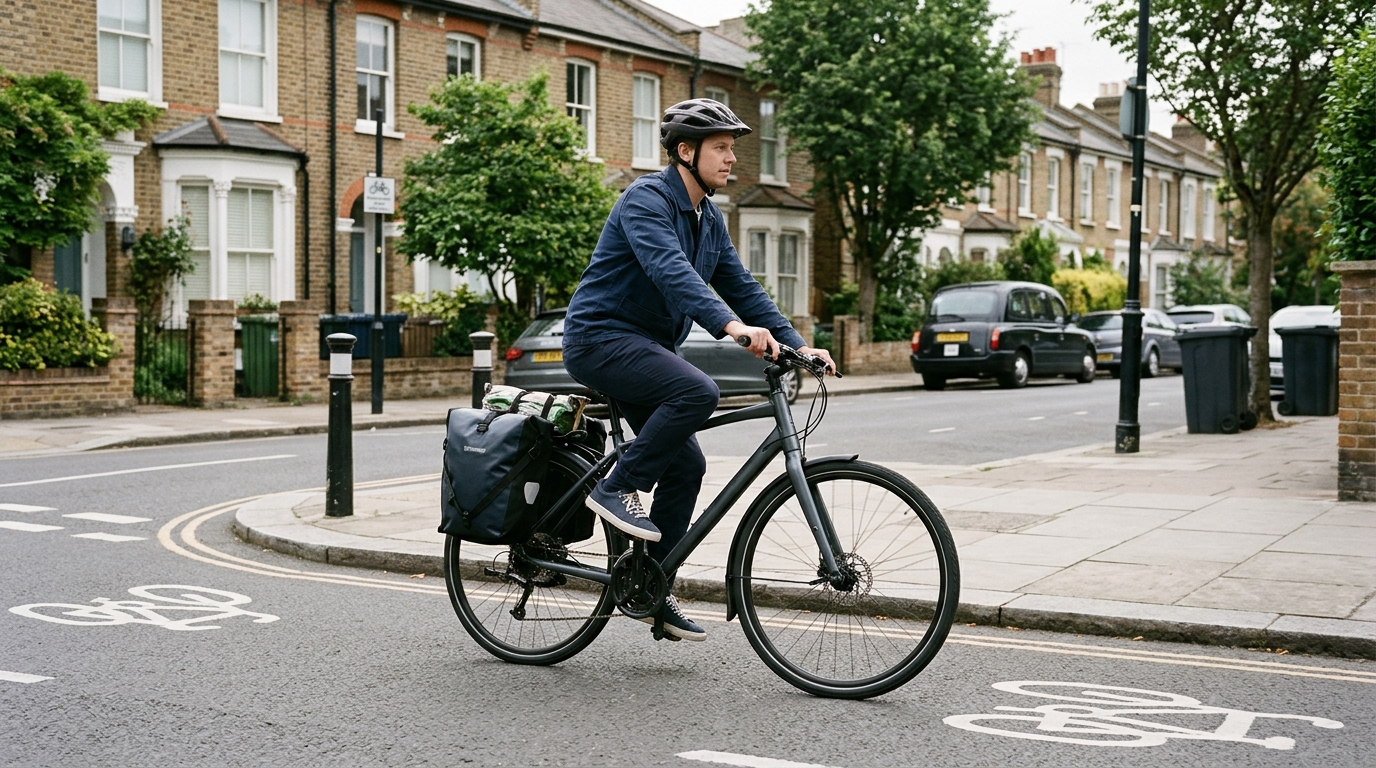
- Plan Your Shopping Trips around Your Bicycle’s Capacity
One of the easiest ways to make grocery shopping by bicycle more manageable is to plan what you need before leaving home.
Rather than attempting to carry a large weekly shop in one journey, consider making smaller trips throughout the week. This reduces the amount of weight you need to transport and makes it easier to keep everything secure.
Choose products that are easier to carry and avoid purchasing several heavy bottles or bulky packages in one trip.
You should also check the maximum load capacity of your bicycle rack, basket and bicycle frame. The manufacturer’s weight limits should always be followed.
For larger shopping trips, making two journeys is often a safer option than overloading your bicycle.
Final Thoughts
Carrying groceries by bicycle does not have to affect your balance or make everyday journeys uncomfortable. With the right equipment, sensible weight distribution and a few basic safety checks, a bicycle can become a practical way to handle regular shopping trips. Rear racks, pannier bags and front baskets each offer useful storage options, but choosing the right combination depends on your bicycle and the amount you need to carry.
If you are looking for suitable bicycles, baskets, pannier bags, rear racks or other cycling accessories, visit Chelsea Bikes. Having the right bicycle and equipment can make everyday journeys, including trips to the local shops, more convenient and enjoyable